

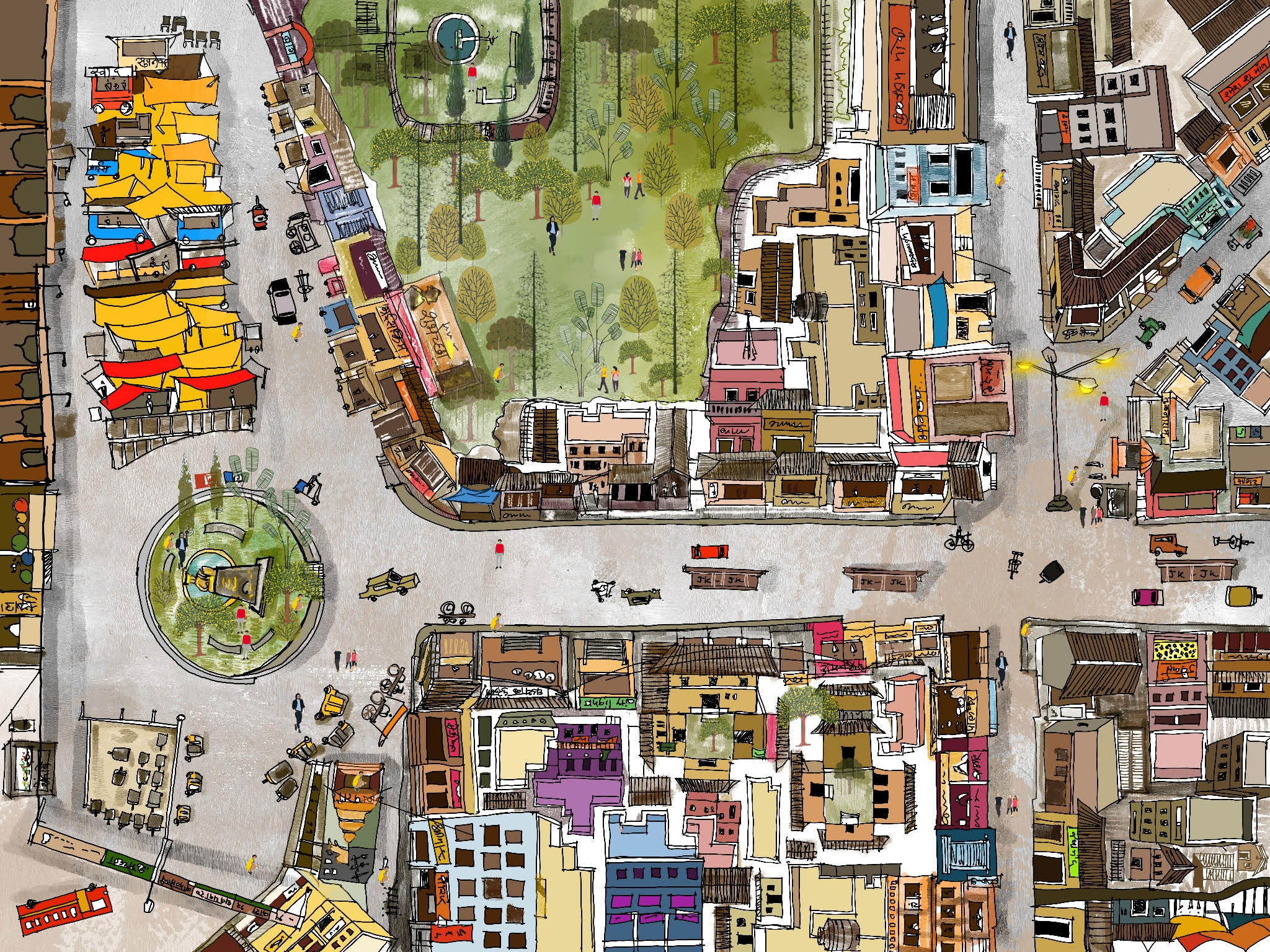
The Architecture for water in western regions of India is spectacular, subtle, and serves the surrounding communities while celebrating the value of water. It becomes interactive and social gathering spaces for daily and cultural activities around water. It seamlessly weaves spiritual aspects with routine activities like bathing, washing, and drinking. The diverse characteristics of water are contained and shaped through spatial entities. Satara is a town where settlement began at the foothills of Fort Ajinkyatara, the administrative center of Chatrapati Shahu Maharaj in the early 19th century.
The natural drainage pattern of the Venna river basin consists of numerous natural streams flowing between ridge-like landforms, carrying rainwater from mountains to the river. The city of Satara sits within this unique natural region between Anjinkyatara Fort and River Venna, which meets the wider Krishna River at Sangam Mahuli.
Seasonal water streams flowing from Ajinkyatara Fort to River Venna create opportunities for response. Since getting water from the distant river was not possible, three primary sources emerged: wells, tala (small lakes), and traditional water harvesting systems.
Credit: Atharva Ghogale
 FOLIO
FOLIO 
These are very beautiful drawings and a wonderful way of documentation. Best wishes to the artist.
LikeLike